Condition
Diabetes care in Miami
Living with type 2 diabetes is easier when your doctor, lab, pharmacy and foot care are under one roof. We help you keep your blood sugar in range and avoid complications.
- English & Spanish
- Medicaid & Medicare
- Rides to your visit

Understanding diabetes
Diabetes means your body has trouble using sugar (glucose) for energy, so it builds up in the blood. Over time, high blood sugar can damage the eyes, kidneys, nerves, heart and feet.
Most people with type 2 diabetes can control it with a plan that combines medication, food, activity and regular check-ups. The A1C blood test shows your average blood sugar over the past three months.
Signs to watch for
- Feeling very thirsty or urinating often
- Tiredness that doesn’t go away
- Blurred vision
- Cuts or sores that heal slowly
- Numbness or tingling in the feet
How we help
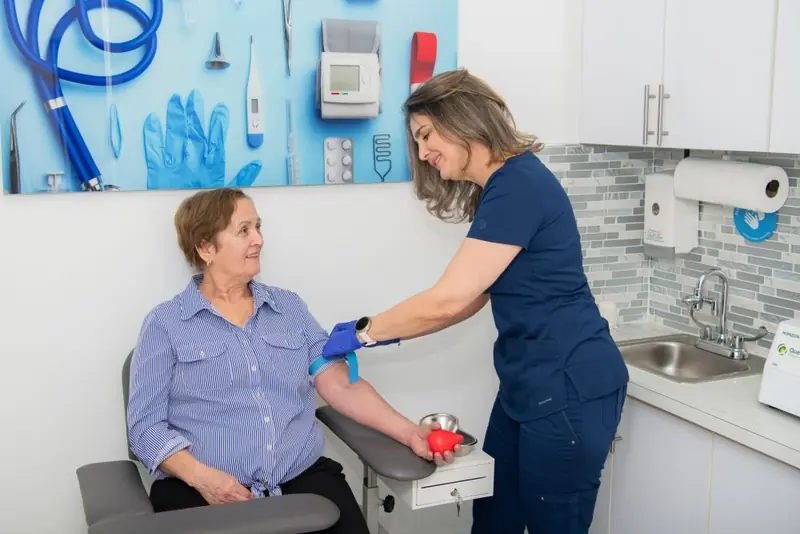
Your primary care doctor sets your targets and adjusts treatment; our lab draws your A1C and kidney tests on site; the pharmacy explains each medicine; and our foot care team checks your feet regularly to prevent wounds.
Primary care
Check-ups, chronic conditions and same-week sick visits for adults and seniors.
Laboratory
Blood work and screenings on site, with most results in 24 to 48 hours.

Podiatry
Foot care for heel pain, nails, calluses and diabetic feet.

Pharmacy
Pick up your prescriptions before you leave, with refills managed for you.
When to get urgent help: Call 911 if blood sugar is very high or very low and the person is confused, vomiting, very drowsy or has trouble breathing.
Questions patients ask
How often should I check my A1C?
Usually every three months while you are adjusting treatment, and every six months once it is stable. Your doctor will tell you what is right for you.
Do you treat diabetes with Medicare or Medicaid?
Yes. We accept Medicare, Medicaid and many Medicare Advantage plans for diabetes care, lab tests and foot exams.
Why do I need foot exams?
Diabetes can reduce feeling in the feet, so small injuries can go unnoticed and become infected. Regular foot checks catch them early.
Care near you
Medically reviewed by the Comforting Aid care team. General information only; it does not replace a consultation.
Book your appointment
Send the form and we will call you to confirm the day and time, check your insurance and, if you need it, arrange your ride.
- (305) 602-9667
- info@comfortingaid.com
- Monday to Friday, 8:00 am – 5:00 pm